
Mauveine Tech
Architectural
Intent
Transforming abstract visions into high-performing architectural realities through design excellence.
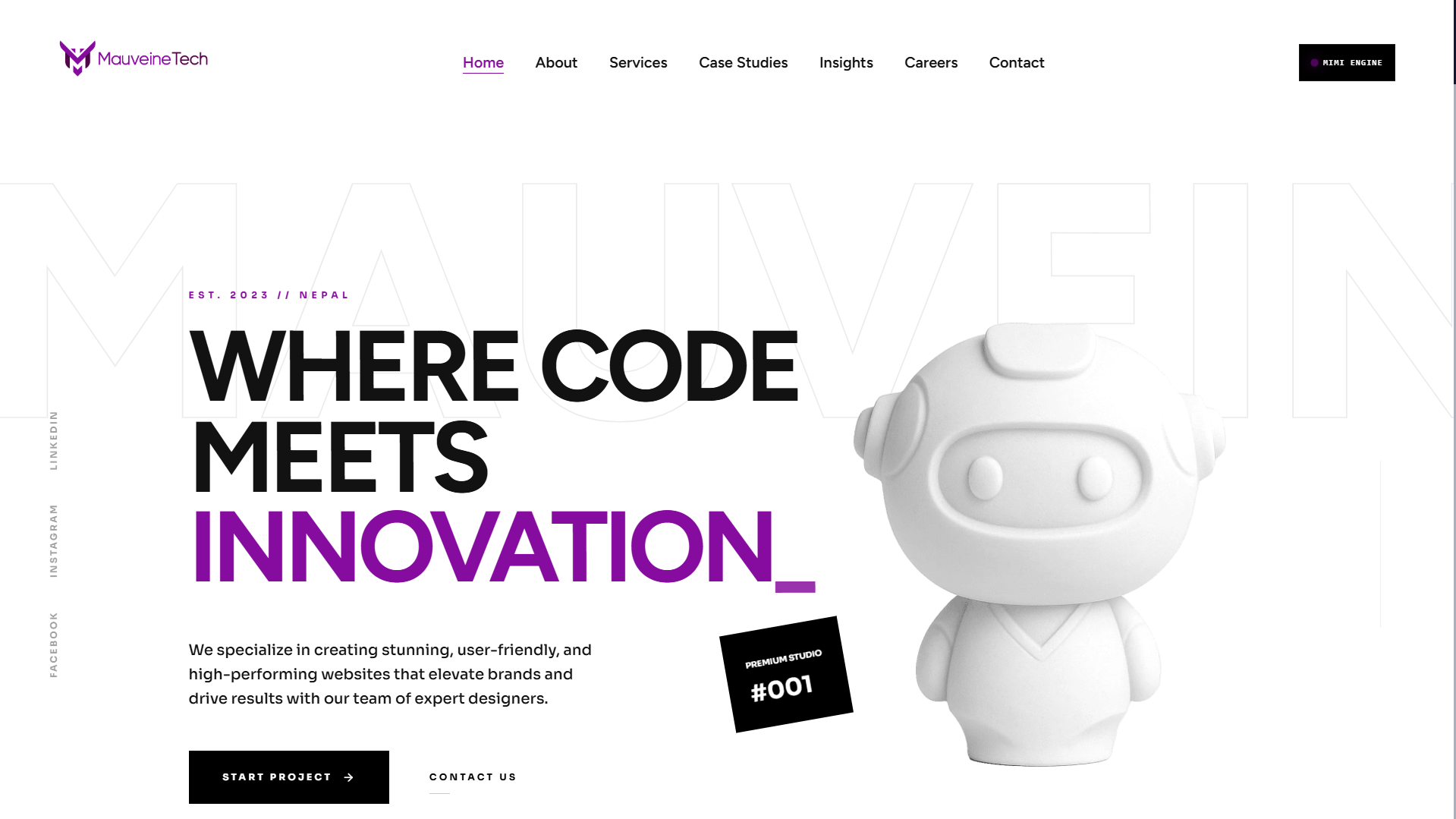
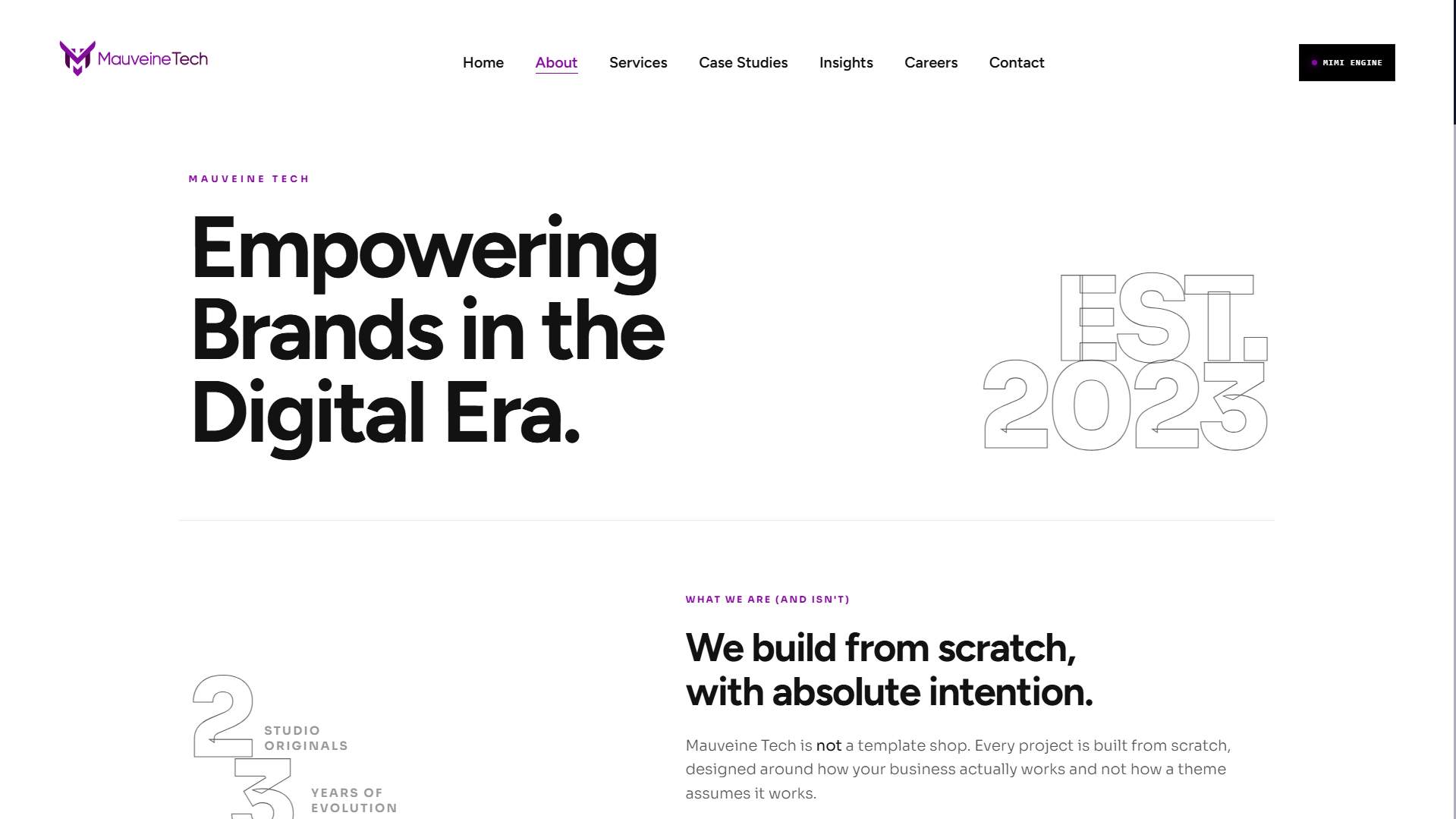
Mauveine Tech's own website is the most direct demonstration of how the company builds. Launched on April 1, 2026 and led by CEO Bibek Lama, the site runs on Laravel 13, PHP 8.3, and MySQL, with Filament 5 handling both the admin panel and the client-facing portal. The frontend is built with Laravel Blade, Bootstrap 5, Alpine.js, and GSAP for motion. Media management runs through Spatie Media Library. Invoices are generated as PDFs via DomPDF and paid through FonePay. The whole stack deploys through a CI/CD pipeline via GitHub Actions to cPanel hosting. There is also an AI layer: MIMI, a frontend visitor assistant, and a full internal editorial pipeline powered by OpenRouter. The site is live at mauveine.tech.
The Problem
The previous Mauveine Tech site ran on WordPress. The problems were not dramatic. They were the slow kind that compound. Theme structure kept boxing in the design. Custom admin features that should have been straightforward turned into plugin workarounds. Conflicting dependencies made every update a small risk. The PageSpeed Performance score sat at 47.
The harder problem was what the site was saying about the company. Mauveine Tech builds custom Laravel applications for clients and explains why that approach matters. Running a generic WordPress site while doing that is a contradiction. If the agency's own site doesn't reflect how it works, that gap shows up in sales conversations.
There was also the question of where the site needed to go. A client portal, an AI editorial pipeline, a digital storefront, automated invoicing. None of that was going to work cleanly on WordPress. The choice was to keep bolting things on or start with the right foundation.
Our Approach
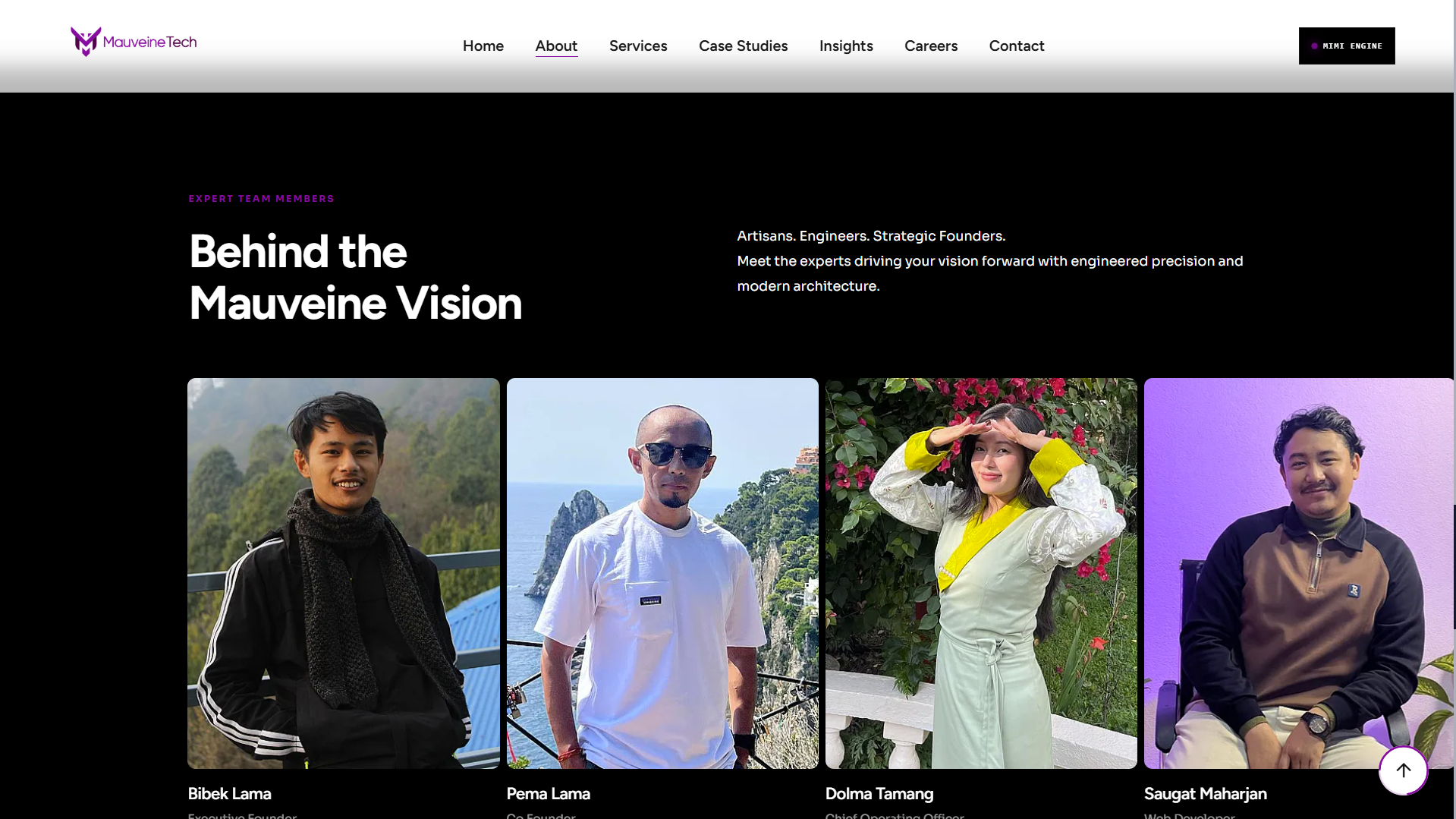
Bibek Lama led the build directly. Laravel 13 was the framework, with strict PHP 8.3 practices throughout: PHP Attributes on models instead of protected properties, all business logic abstracted into Actions rather than living in controllers, all validation handled by dedicated Form Request classes. The code was written to a specific standard from the start, not refactored toward one later.
Filament 5 was chosen for the admin side. But the scope went well beyond a standard dashboard. It became the operational centre of the agency: project management with sprint cycles and task prioritisation, full content control across case studies, services, team, testimonials, and FAQs, and a separate authenticated portal for clients. The multi-tenant scoping in the portal is strict. Each client sees only their own data.
The frontend follows what Mauveine Tech calls Luxury Fluidity: Bootstrap 5 as the structural base, stripped of generic defaults, with custom CSS handling typography and GSAP managing animations. Nothing in the interface snaps or jerks. Motion has deliberate weight.
Deployment runs through GitHub Actions with a CI/CD pipeline pushing to cPanel. That was a considered choice. The assumption in most technical conversations is that serious software needs enterprise-grade infrastructure. This build runs on shared hosting and scores 88 on PageSpeed Performance. The engineering does the work the infrastructure would otherwise have to.
What We Built
The site operates across several distinct layers.
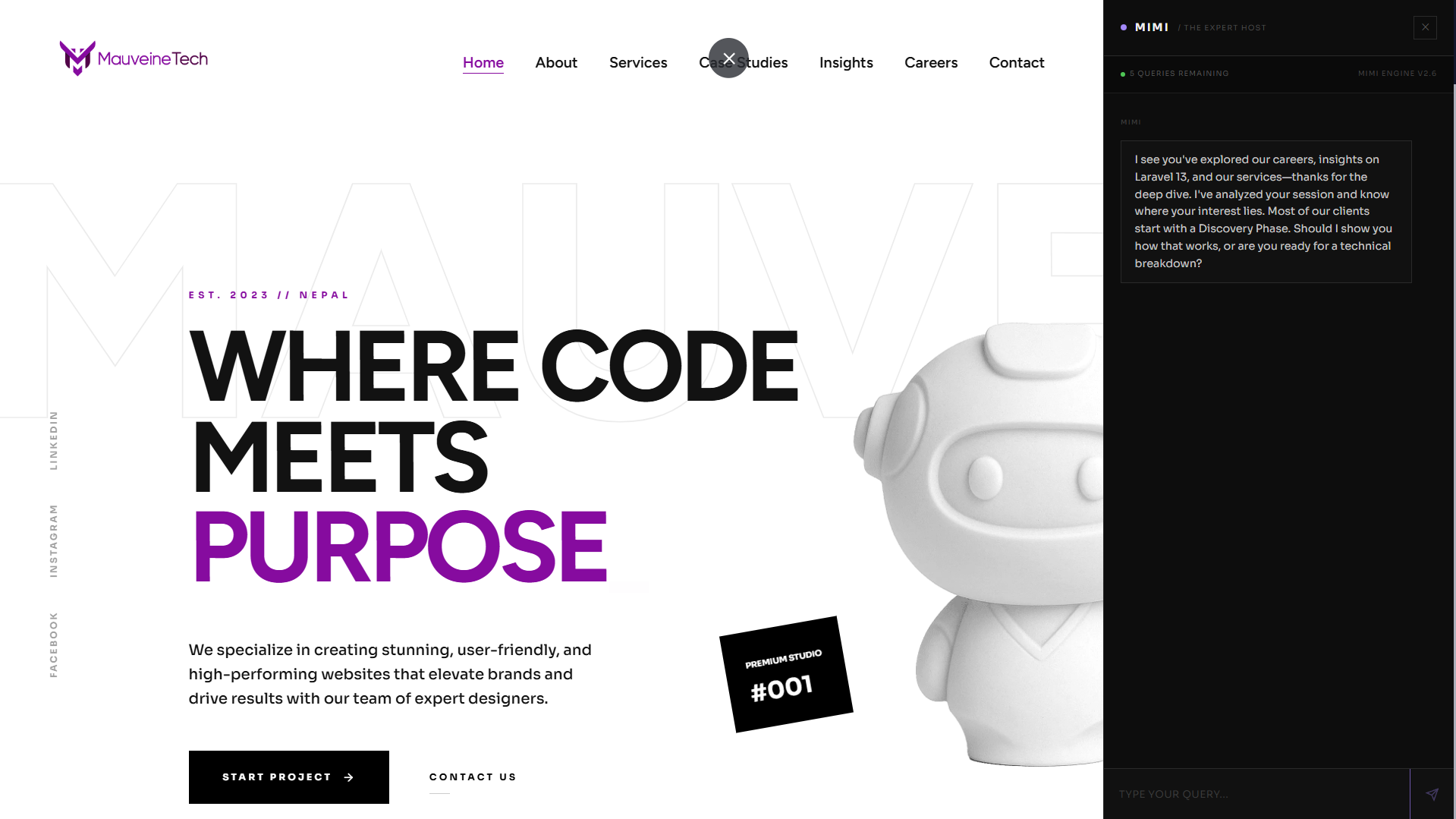
The public frontend presents Mauveine Tech's services, case studies, team, and philosophy. MIMI, the AI visitor assistant, runs on the frontend as a lead capture and navigation tool. It identifies visitors, maps their movement through the site, and routes them appropriately. If one model goes down, a fallback chain called Titan Squad switches to the next available model automatically.
The AI content pipeline sits inside the Filament admin. It runs five agents in sequence: Research, Outline, Writer, SEO Meta, and Image Prompt. Body content, metadata, and images generate in parallel using Laravel Concurrency. Image generation is handled automatically as part of the same pipeline. A blog post that would take hours to research and draft manually comes out of the pipeline publication-ready, from inside the dashboard.
The client portal at /portal gives clients a private workspace. They see Kanban boards, milestone timelines, and project progress without needing to contact anyone at Mauveine Tech for an update. Invoices are generated as PDFs via DomPDF and include VAT and PAN fields. Payment processes directly through FonePay. Our multiple clients are using the portal today.
The admin panel at /mauveinepanel handles everything else: sprint planning, task assignment with priority levels from Critical to Low, agency settings including branding and contact metadata, and a singleton management system for site-wide content. Every primary content model includes integrated SEO meta fields and JSON-LD schema generation baked in, not added later.
Outcome
Analysis
Success Validation & Insights
Key Results
PageSpeed scores before and after, on the same hosting environment:
Metric | Before | After |
|---|---|---|
Performance | 47 | 88 |
Accessibility | 87 | 94 |
Best Practices | 73 | 92 |
SEO | 91 | 100 |
The client portal is operational. Clients track projects, download invoices, and pay through FonePay without manual involvement from the Mauveine Tech team. The AI pipeline is producing content from inside the admin panel. The digital storefront is in active development with NPR currency support and cart logic.
The site is also the most honest sales tool the company has. When a client asks what Mauveine Tech builds, the answer is: this.
Lessons Learned
Launching on April 1st was not planned as a statement. The build was ready, so it shipped. But there's something accurate about it. The old site had problems that were easy to ignore individually and hard to fix collectively. Getting the new one built properly, on a self-imposed deadline, is a fair summary of how Mauveine Tech tends to operate.
The scope of this build was large. A client portal, an AI pipeline, a full admin architecture, automated invoicing, CI/CD deployment, and a public frontend all shipped together. That only worked because Bibek led it directly. Distributed ownership on a project like this would have produced a less coherent codebase. Having one person accountable for the architecture kept the decisions consistent throughout.
"We built this site because we were tired of telling clients what good engineering looks like while running a site that didn't show it. Everything we put in front of a client, we should be willing to run ourselves first."